Why Mold Testing Detroit Homeowners Shouldn't Skip a Professional Inspection
Living in the Detroit area means dealing with older housing stock, humid summers, and basement moisture that seems to creep in no matter what you do. I have spent years working on water damage and mold issues in homes across Wayne and Oakland counties, and one thing I can tell you with certainty is that guessing about mold is a bad idea. You might see a patch of discoloration on a wall or smell that musty odor in the basement, but without proper testing you cannot know what you are dealing with or how far it has spread. That is where mold testing Detroit property owners rely on becomes a critical first step, not an afterthought.
What Mold Testing Actually Tells You
A visual inspection can only reveal surface growth. Mold testing goes deeper. It identifies the species present, measures spore counts in the air, and pinpoints hidden colonies behind drywall, under flooring, or inside ductwork. I have walked into basements where the only visible clue was a faint smell near the sump pump, and a thorough test revealed aspergillus and penicillium levels five times above safe thresholds. Without that data, you would have painted over the wall and called it done. The truth is that a mold inspection report from a qualified tester gives you a roadmap. It tells you where to remediate, what safety gear to use, and whether the problem is contained or spreading through the HVAC system.
For Detroit homeowners, the mix of old brick foundations, clay soil, and frequent heavy rain creates a perfect environment for moisture intrusion. That is why mold testing Detroit services are in high demand, especially after a wet spring. A good tester will use an ERMI test to analyze dust samples for mold DNA, which gives a more complete picture than simple air sampling alone. The ERMI test is not cheap, but it is the gold standard for understanding long-term exposure risks. I have seen cases where an ERMI test revealed hidden growth in a crawl space that had been sealed off for years, something a visual check would have missed entirely.
The Difference Between Testing and DIY Kits
You can buy a petri dish kit at the hardware store for twenty dollars. You can also buy a relative humidity meter and a cheap borescope. Those tools have their place, but they are not a substitute for professional testing. A homeowner in Summit County called me after using a store-bought kit that showed "high mold count" but gave no species information. She spent a weekend scrubbing with bleach and a HEPA vacuum, only to have the smell return two weeks later. When I tested the space properly, I found that the bleach had only removed surface staining while the active colony remained inside the wall cavity. Professional testing would have saved her the time, the frustration, and the risk of spreading spores deeper into the house.

A professional mold inspection report will include spore trap samples, tape lift samples from suspect surfaces, and sometimes a bulk sample of material like drywall or insulation. The lab analysis identifies the genus and, in many cases, the species. That matters because black mold (Stachybotrys chartarum) requires different handling than common allergenic molds like Cladosporium. The report also gives you a baseline to compare against after remediation, so you know the job was done right. I always recommend a post-remediation test, and I have seen ERMI scores drop by 80 percent after a proper cleanup that included air duct cleaning and crawl space encapsulation.
Common Hidden Problem Areas in Detroit Homes
Every region has its weak spots. In Detroit, the top areas for mold growth include:
- Basements with poor drainage and no moisture barrier, especially in older bungalows and two-family flats.
- Attics with insufficient attic ventilation, where warm air from the living space meets cold roof sheathing and condenses.
- Bathrooms that lack a bathroom exhaust fan or have a fan that vents into the attic instead of outside.
- Ductwork in forced-air heating systems, where dust and humidity create a breeding ground for spores.
- Crawl spaces without proper crawl space encapsulation, leaving bare dirt exposed to moisture from the ground.
I once tested a house in the University District where the bathroom exhaust fan was installed backward. It pulled air from the attic into the bathroom instead of the other way around. The result was a hidden colony of mold inside the ceiling cavity above the shower. The homeowner had been smelling something off for months but thought it was just the old plumbing. A simple air sample near the bathroom ceiling told the story. That is the kind of detail a trained eye catches, and it is why mold testing Detroit residents trust a professional inspection over a quick look.
What Happens After the Test
Once you have a mold inspection report in hand, the real work begins. The report should include recommendations for remediation, and those steps vary based on the extent of the growth. For small, contained areas, a product like Concrobium or RMR-141 can be effective when used with proper containment and a HEPA vacuum. For larger infestations, you may need to remove and replace building materials. In cases where the mold has spread into the HVAC system, air duct cleaning becomes essential. I have also seen situations where a simple dehumidifier running continuously in the basement solved the root cause, because the relative humidity meter showed levels above 65 percent even on dry days.
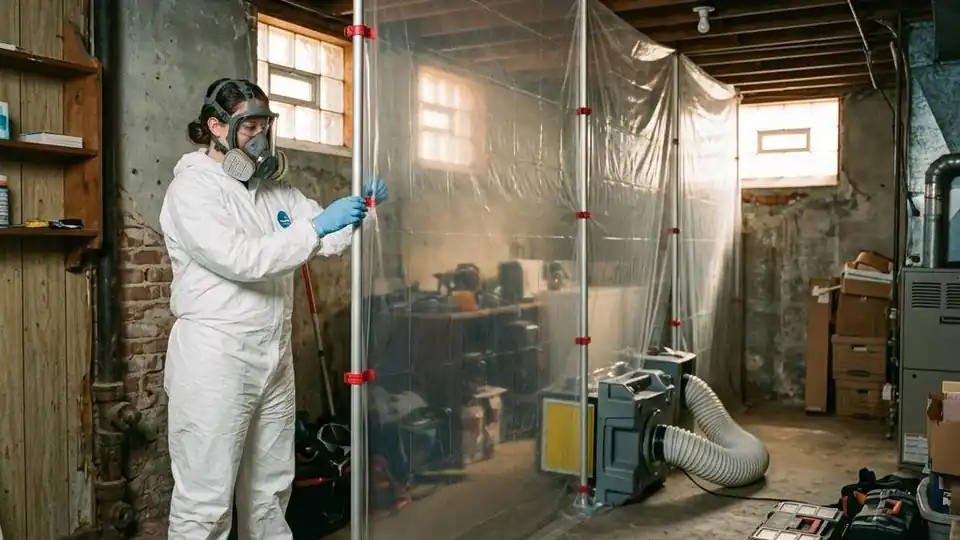
One overlooked step is setting up an air scrubber during remediation. An air scrubber with a HEPA filter captures airborne spores while you work, preventing them from settling in other rooms. I have used this approach in dozens of homes, and it makes a measurable difference in post-remediation test results. The same principle applies to containment: sealing off the work area with plastic sheeting and negative air pressure is not overkill, it is standard practice recommended by the IAQA and any mold remediation certification program worth its name.

After remediation, you should test again to confirm the problem is resolved. I have seen homeowners spend thousands on mold removal only to skip the follow-up test, and then wonder why the smell returns a few months later. A second round of testing, often using the same ERMI test protocol, gives you peace of mind and a documented record. That record can be important if you plan to sell the home, or if you need to show proof of remediation to a tenant or insurer. The Michigan Department of Environment does not require a specific certification for mold testing, but having a report from a qualified professional carries weight in any dispute.
Products That Help, But Only When Used Correctly
I have used Mold Armor and Concrobium on many jobs, and they are solid products for surface treatment. But I have also seen people apply them incorrectly, spraying them onto porous wood or drywall and expecting the mold to disappear. Mold Armor works best on non-porous surfaces like tile and glass. For wood studs and OSB sheathing, a product like RMR-141 or a professional-grade antimicrobial is more appropriate. The key is matching the product to the material and the mold species. A mold inspection report tells you what you are dealing with, so you can choose the right chemistry.
A dehumidifier is another tool that gets misused. Placing a dehumidifier in a damp basement helps, but only if the unit is sized correctly for the space and if it drains automatically. I have seen small dehumidifiers running 24 hours a day in a 1500-square-foot basement, and they barely made a dent because the unit was too small. A relative humidity meter will tell you if the dehumidifier is actually working. You want humidity below 50 percent to inhibit mold growth. Above 60 percent, you are rolling the dice.
When to Call a Professional
If the affected area is larger than about ten square feet, or if you suspect the mold is behind walls or in the HVAC system, bring in someone with mold remediation certification. The same goes if anyone in the home has asthma, allergies, or a compromised immune system. Mold testing Detroit homeowners arrange through a certified inspector is not expensive compared to the cost of a misdiagnosis. I have seen people try to handle a hidden mold problem themselves, only to make it worse by disturbing the colony and spreading spores throughout the house. A professional inspection and a clear report are worth every penny.
Basement waterproofing is another area where testing pays off. Many Detroit homes have foundation cracks or missing gutters that funnel water toward the basement wall. A moisture test inside the basement, combined with an exterior inspection, can reveal whether the problem is a leaky pipe, poor grading, or a failing moisture barrier. Fixing the water source is always the first step. Without that, no amount of Concrobium or air scrubbing will keep the mold away for long.
I remember a house in the Boston-Edison district where the crawl space had never been encapsulated. The dirt floor was damp year-round, and the mold spore count in the living room was triple the outdoor level. The homeowner had been running an air purifier for months with no improvement. After crawl space encapsulation, a heavy-duty dehumidifier, and a single application of RMR-141 to the exposed joists, the follow-up test showed normal levels. That house had been making the family sick for years, and nobody knew because they had never tested. A simple mold inspection report changed everything.
If you live in Detroit or the surrounding area and suspect mold, do not wait. The combination of aging infrastructure, humid summers, and heavy snowfall in winter creates conditions that favor mold growth in even the best-maintained homes. A professional test gives you facts, not guesses. And facts are what you need to protect your home and your health.